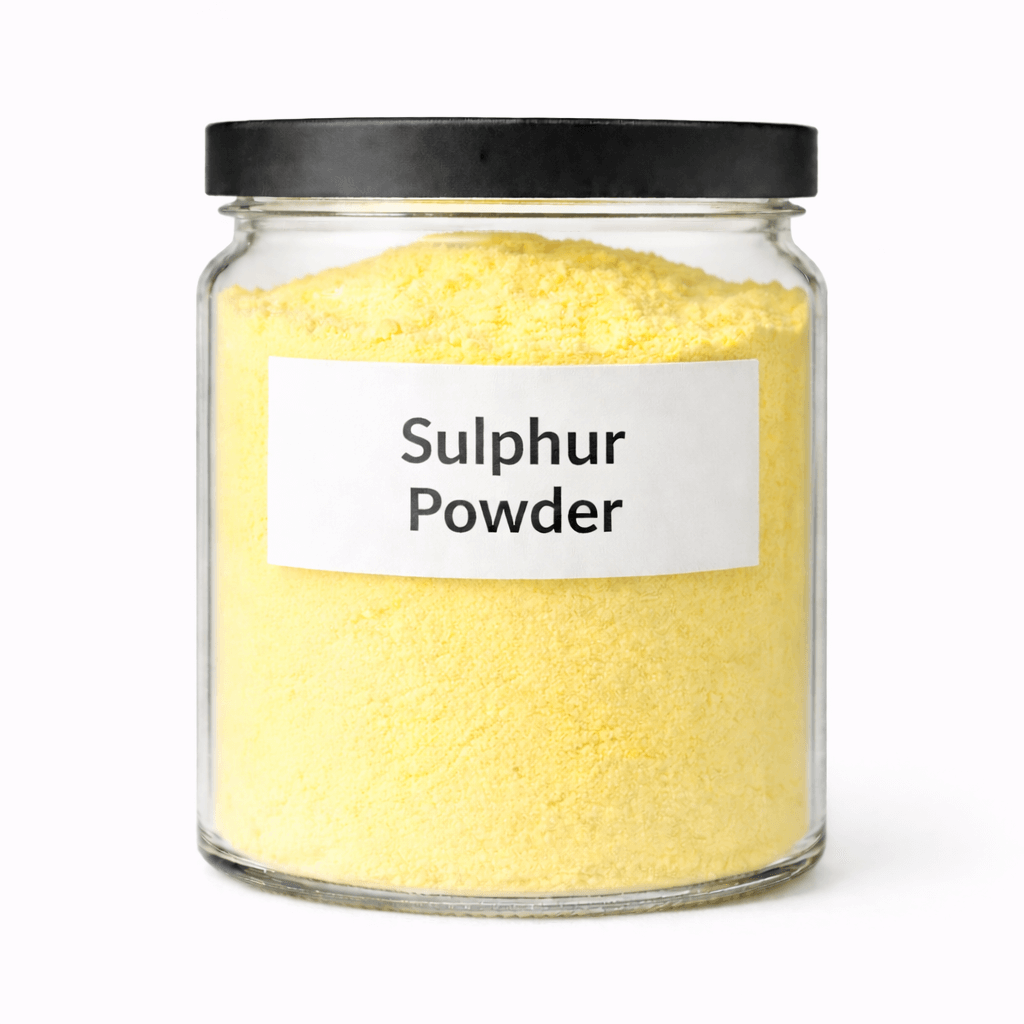
Sulphur Powder
Price range: ₦2,500.00 through ₦25,200.00
Sulphur Powder (Sulfur) is a pure, finely milled mineral active with clinically proven keratolytic, antibacterial, and sebum-regulating properties. It unclogs pores, kills acne-causing bacteria, reduces breakouts, and controls excess oil — without bleaching fabrics like Benzoyl Peroxide. Non-comedogenic (rating 0) and stable across pH 4–9. Perfect for acne face masks, spot treatments, oil-control cleansers, anti-dandruff shampoos, and scalp treatments. Recommended usage rate: 1% – 5%. Disperse in oils, emulsions, or cream bases — not water soluble.
If you have struggled with persistent acne, stubborn blackheads, or excessively oily skin, you have probably tried everything. Serums, clay masks, salicylic acid, niacinamide — the list goes on. But here is an ingredient that has been clearing skin since long before the modern skincare industry existed. Sulphur Powder is one of the oldest and most clinically validated acne-fighting ingredients in the world. At Organicsbyjumira, we supply finely milled, high-purity, cosmetic-grade Sulphur Powder. As a result, your blemish-control formulations deliver real, visible results that your customers will actually notice.
What Is Sulphur Powder and Why Does It Work So Well?
Sulphur is a naturally occurring mineral element found in the earth. Its INCI name is simply Sulfur. The skin naturally contains sulphur compounds as part of its own structural proteins. Because of this, the skin responds well to topical sulphur application. It works through three simultaneous mechanisms. First, it acts as a keratolytic — it loosens and dissolves the bonds between dead skin cells. Second, it acts as an antibacterial agent — it inhibits the growth of acne-causing bacteria on the skin surface. Third, it acts as a powerful sebum regulator — it absorbs excess oil and reduces the shiny, congested appearance of oily skin. Together, these three actions address the root causes of acne and congestion rather than just masking symptoms.
Sulphur Powder vs Other Acne Actives — How Does It Compare?
The acne ingredient market is crowded. Salicylic Acid, Benzoyl Peroxide, Retinoids, and Niacinamide all have their place. However, Sulphur Powder occupies a unique position among them. Unlike Benzoyl Peroxide, it does not bleach fabrics or cause significant skin dryness and irritation. Unlike Salicylic Acid, it does not require a specific pH to be active. Furthermore, it is gentler than both on sensitive and reactive skin types. Therefore, it is an excellent choice for those whose skin does not tolerate stronger conventional acne actives. Moreover, it works particularly well when other actives have failed to deliver consistent results. As a result, many dermatologists and formulators use Sulphur Powder as their go-to alternative active in sensitive acne formulations.
Skin Benefits of Sulphur Powder
Sulphur Powder delivers a comprehensive range of clinically recognized skin benefits. First, it unclogs pores by dissolving dead skin cell buildup and excess sebum. Second, it kills acne-causing bacteria directly on the skin surface. Third, it reduces the size and severity of active breakouts faster than many topical alternatives. In addition, it controls excess oil production throughout the day. Moreover, it helps prevent new blackheads and whiteheads from forming. Furthermore, it improves overall skin clarity and texture with consistent use. Because of these combined benefits, it is genuinely one of the most multifunctional blemish-control actives available for cosmetic formulation.
Sulphur Powder for Scalp & Dandruff Conditions
Here is something many people do not know about Sulphur Powder. It is not just for facial acne. It is also one of the most effective natural ingredients for scalp conditions. Dandruff, seborrhoeic dermatitis, and scalp psoriasis all involve excess sebum, inflammation, and microbial imbalance. Sulphur Powder addresses all three simultaneously. As a result, it has a long history of use in anti-dandruff shampoos, scalp treatments, and seborrhoeic dermatitis creams. Furthermore, dermatological studies confirm its efficacy in managing seborrhoeic conditions. Therefore, including it in your scalp care formulations broadens your product reach significantly. For scalp formulations, use it at 1% – 3% for gentle but effective results.
Recommended Usage Rate & Formulation Guidance
Use Sulphur Powder at a concentration of 1% – 5% in finished skincare formulations. Use it at 1% – 2% in daily use products such as cleansers, light creams, and toners where a gentle ongoing clarifying effect is desired. Use it at 3% – 5% in targeted spot treatments, clarifying face masks, and intensive blemish-control formulations where stronger action is needed. Because Sulphur Powder is insoluble in water, never try to dissolve it directly in a water phase. Instead, disperse it smoothly into emulsions, gels, cream bases, anhydrous balms, or clay mask formulations. Furthermore, always mix it thoroughly to ensure even distribution throughout your formulation. As a result, your finished product delivers consistent and predictable performance.
How to Incorporate Sulphur Powder Into Your Formulations
Working with Sulphur Powder requires a slightly different approach than water-soluble actives. First, pre-mix your Sulphur Powder with a small amount of your base oil or emollient. This creates a smooth, lump-free paste. Then incorporate this paste into your emulsion or base during the cool-down phase. As a result, you achieve a smooth, even dispersion without clumping or streaking in your finished product. Furthermore, Sulphur Powder is stable across a pH range of 4 – 9. Therefore, it is compatible with a wide range of formulation systems. Its comedogenic rating of 0 means it does not block pores. This makes it perfectly suited for acne and oily skin formulations where pore congestion is already a concern.
The Smell — Let’s Address It Honestly
There is no point pretending otherwise. Sulphur Powder has a distinct eggy, sulphurous odour in its raw form. This is completely normal. It is a sign of its purity and natural origin. However, at recommended usage rates of 1% – 5%, the odour in a finished formulation is significantly reduced. Furthermore, pairing it with well-chosen essential oils or fragrance ingredients effectively masks any residual scent. Therefore, do not let the raw smell put you off. Once properly formulated, your finished product can smell completely pleasant. Many of the most effective acne products on the market contain Sulphur and smell perfectly fine.
Best Ingredient Pairings for Sulphur Powder Formulations
Sulphur Powder pairs powerfully with a range of complementary blemish-control ingredients. For acne-fighting face masks, combine it with Kaolin Clay, Tea Tree Essential Oil, and Niacinamide. As a result, you create a deeply clarifying and antibacterial treatment mask. For spot treatments, pair it with Salicylic Acid and Witch Hazel for a multi-active blemish-control formula. Furthermore, combining it with Zinc Oxide adds extra antibacterial and soothing benefits. For scalp treatments, pair it with Rosemary Essential Oil, Tea Tree Oil, and Apple Cider Vinegar for a powerful anti-dandruff and sebum-regulating scalp serum. Together, these combinations create genuinely effective formulations that tackle acne and congestion from multiple angles.
Who Should Use Sulphur Powder in Their Formulations
Sulphur Powder is ideal for formulators creating products for oily, acne-prone, and combination skin types. Furthermore, it suits those developing scalp care products targeting dandruff and seborrhoeic conditions. It is also a valuable ingredient for natural skincare brands looking for clinically validated acne actives that align with clean beauty values. Because it is a naturally occurring mineral ingredient, it fits authentically within natural and organic skincare formulation philosophies. However, it is not recommended for dry, sensitive, or extremely reactive skin formulations as its keratolytic action may cause dryness at higher concentrations.
Formulation Applications
Sulphur Powder suits a wide range of product types. These include clarifying face masks and clay masks, targeted acne spot treatments, oil-control cleansers and face washes, blemish-control moisturizers and creams, anti-dandruff shampoos and scalp treatments, seborrhoeic dermatitis creams, acne soaps and cleansing bars, blackhead-removing treatments, and body acne sprays and lotions.
Solubility, Appearance & Storage
Sulphur Powder presents as a fine pale yellow mineral powder with a characteristic sulphurous aroma. It is insoluble in water. It disperses best in oils, emulsions, gels, and cream bases. Store it in a cool, dry, and tightly sealed container away from direct sunlight and moisture. Because it is a stable mineral compound, it has a long shelf life when stored correctly. As a result, it is a reliable and cost-effective long-term stock ingredient for any formulation studio or skincare brand.
Frequently Asked Questions About Sulphur Powder
Does Sulphur Powder bleach or stain fabrics? Unlike Benzoyl Peroxide, Sulphur Powder does not bleach or stain fabrics. This makes it a significantly more practical acne active for everyday use.
Can I use Sulphur Powder with Retinol or Vitamin C? Use caution when combining multiple strong actives. Furthermore, always conduct stability testing when combining Sulphur with other actives. Start with lower concentrations to avoid over-exfoliation.
How long does it take to see results from Sulphur-based products? Most users see a noticeable reduction in oil and congestion within one to two weeks of consistent use. However, individual skin responses vary. Therefore, always recommend patch testing before full application.
Is Sulphur Powder natural? Yes. Sulphur is a naturally occurring mineral element. It is one of the few acne actives that is genuinely natural in origin rather than synthetically derived.
Safety & Patch Test
Sulphur Powder is generally well-tolerated at recommended concentrations. Nevertheless, always perform a patch test before full application. Do not apply to broken, wounded, or severely irritated skin. Avoid contact with eyes and mucous membranes. If excessive dryness or irritation occurs, reduce the concentration in your formulation. Consult a healthcare professional if you are pregnant, nursing, or managing a skin condition. For external use only. Keep out of reach of children.
Product Details
INCI Name: Sulfur
Also Known As: Sulphur Powder, Precipitated Sulphur, Brimstone
Appearance: Fine pale yellow mineral powder
Aroma: Characteristic sulphurous odour (significantly reduced in finished formulations)
Solubility: Insoluble in water — disperse in oils, emulsions, gels, or cream bases
Comedogenic Rating: 0 — non-pore-blocking, ideal for acne formulations
pH Stability: Stable between pH 4 – 9
Recommended Usage Rate: 1% – 5%
Suitable Skin Types: Oily, acne-prone, and combination skin. Use with caution on sensitive or dry skin
Key Pairings: Kaolin Clay, Tea Tree Essential Oil, Niacinamide, Salicylic Acid, Witch Hazel, Zinc Oxide, Rosemary Essential Oil
Applications: Acne face masks, spot treatments, oil-control cleansers, blemish creams, anti-dandruff shampoos, scalp treatments, acne soaps, and body acne products
Explore more professional formulation ingredients at Organicsbyjumira Active Ingredients.
| Weight | N/A |
|---|---|
| Dimensions | N/A |
| size | 250g, 500g, 1kg, 3kg |
Be the first to review “Sulphur Powder”
You must be logged in to post a review.
Related products
Carrier Oils
Herbal Powders & Soaps
Carrier Oils
Emulsifiers
Herbal Powders & Soaps
Herbal Powders & Soaps
Herbal Powders & Soaps
Emulsifiers
Reviews
There are no reviews yet.