Beauty, Blog, SKC'Jumira Insights, skincare
Ylang Ylang Essential Oil for Nigerian Skin — Benefits, Uses and How to Formulate With It
Mar
Ylang Ylang Essential Oil for Nigerian Skin: Benefits, Uses, and Formulation Guide
If you have been building your essential oil collection for skincare formulation or aromatherapy in Nigeria, Ylang Ylang Essential Oil belongs on your shelf. It is one of the most versatile and skin-active essential oils available — and yet it remains significantly underused by Nigerian formulators compared to more familiar oils like Lavender and Tea Tree.
This guide covers everything you need to know about Ylang Ylang Essential Oil for Nigerian skin — what it does, how to use it safely, how to formulate with it, and where to source cosmetic-grade Ylang Ylang essential oil in Nigeria.
What Is Ylang Ylang Essential Oil?
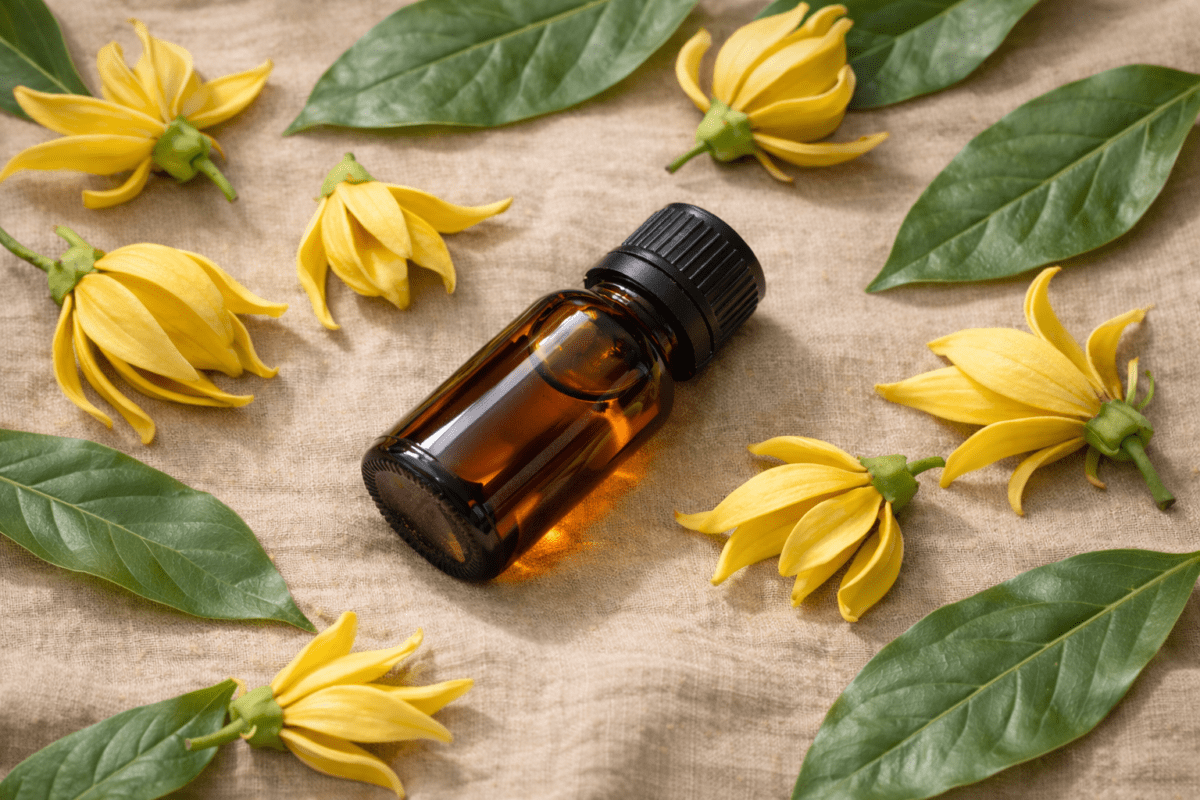
Ylang Ylang essential oil is steam-distilled from the fresh yellow blossoms of the Cananga odorata tree, a tropical tree cultivated primarily in Madagascar, the Comoros Islands, and the Philippines. Its INCI name is Cananga Odorata Flower Oil.
The name “Ylang Ylang” comes from a Tagalog phrase meaning “flower of flowers.” This beautifully describes an oil with one of the most complex and elegant natural fragrances in aromatherapy. Its scent is intensely sweet, floral, and slightly balsamic, and it is famously one of the key ingredients in some of the world’s most iconic perfumes.
Beyond fragrance, Ylang Ylang essential oil also offers genuine skin-active benefits, making it a functional and valuable ingredient in cosmetic formulation.
Why Ylang Ylang Works Well for Nigerian Skin
Nigerian skin faces a demanding combination of environmental stressors. High humidity, intense UV exposure, hard water, dust, and pollution from urban environments can weaken the skin barrier. Air conditioning strips moisture from the skin while outdoor heat triggers excess sebum production.
For many Nigerians, the result is a frustrating paradox — skin that appears oily on the surface but feels dehydrated underneath.
Ylang Ylang essential oil addresses this problem directly.
Sebum regulation is one of its most recognised skincare properties. Unlike many ingredients that target either dry or oily skin, Ylang Ylang helps balance sebum production regardless of skin type. It signals the sebaceous glands to normalise oil output, reducing excess shine without triggering the rebound oil production caused by harsh stripping products.
Its anti-inflammatory properties help calm redness, irritation, and blemishes often triggered by heat, sweat, and pollution exposure. Its natural antimicrobial activity also supports a healthier skin microbiome — particularly useful for acne-prone skin in Nigeria’s humid climate.
Additionally, Ylang Ylang provides antioxidant protection, helping defend skin against oxidative stress caused by sun exposure and pollution, both of which accelerate visible ageing.
For Nigerian formulators, this essential oil is therefore not just a fragrance ingredient — it is a valuable functional active.
Aromatherapy Benefits of Ylang Ylang in Nigeria
Beyond skincare, Ylang Ylang essential oil offers powerful aromatherapy benefits that are particularly useful in Nigeria’s fast-paced urban environments.
When diffused or used in massage blends, Ylang Ylang has clinically documented calming and mood-lifting effects. It helps reduce cortisol levels — the body’s primary stress hormone. Lower cortisol levels not only improve emotional wellbeing but also benefit the skin directly, since high cortisol triggers excess oil production and inflammation.
In cities like Lagos and Abuja where daily commuting, work pressure, and environmental stress are common, a Ylang Ylang diffuser blend at the end of the day can serve as both a wellness ritual and an indirect skincare practice.
How to Use Ylang Ylang Essential Oil Safely
Ylang Ylang essential oil must always be diluted before skin application. Never apply it directly to the skin, as undiluted essential oils can cause irritation or sensitisation, especially on skin already stressed by heat and humidity.
- Facial formulations: 0.5% – 1%
- Body oils and massage blends: 1% – 2%
- Diffuser blends: 3 – 5 drops per 100ml water
Always perform a patch test before using any new essential oil. Apply a small diluted amount to the inner arm and wait 24 hours before full use.
How to Formulate With Ylang Ylang Essential Oil
For cosmetic formulation, Ylang Ylang essential oil should be added during the cool-down phase of a formulation after the mixture has cooled below 40°C. This preserves the aromatic and therapeutic properties that can degrade when exposed to heat.
Recommended ingredient pairings for Nigerian skincare formulations:
- Balancing facial oils: Combine Ylang Ylang with Jojoba Oil, Rosehip Oil, and Squalane for lightweight hydration and sebum balance.
- Relaxation massage oils: Blend with Sweet Almond Oil and Lavender Essential Oil for a calming massage blend.
- Natural perfume blends: Use Ylang Ylang as a heart note with Bergamot or Lemon as top notes and Cedarwood or Sandalwood as base notes.
Simple Balancing Facial Oil Recipe Using Ylang Ylang
Below is a beginner-friendly formulation designed specifically for Nigerian combination and oily skin.
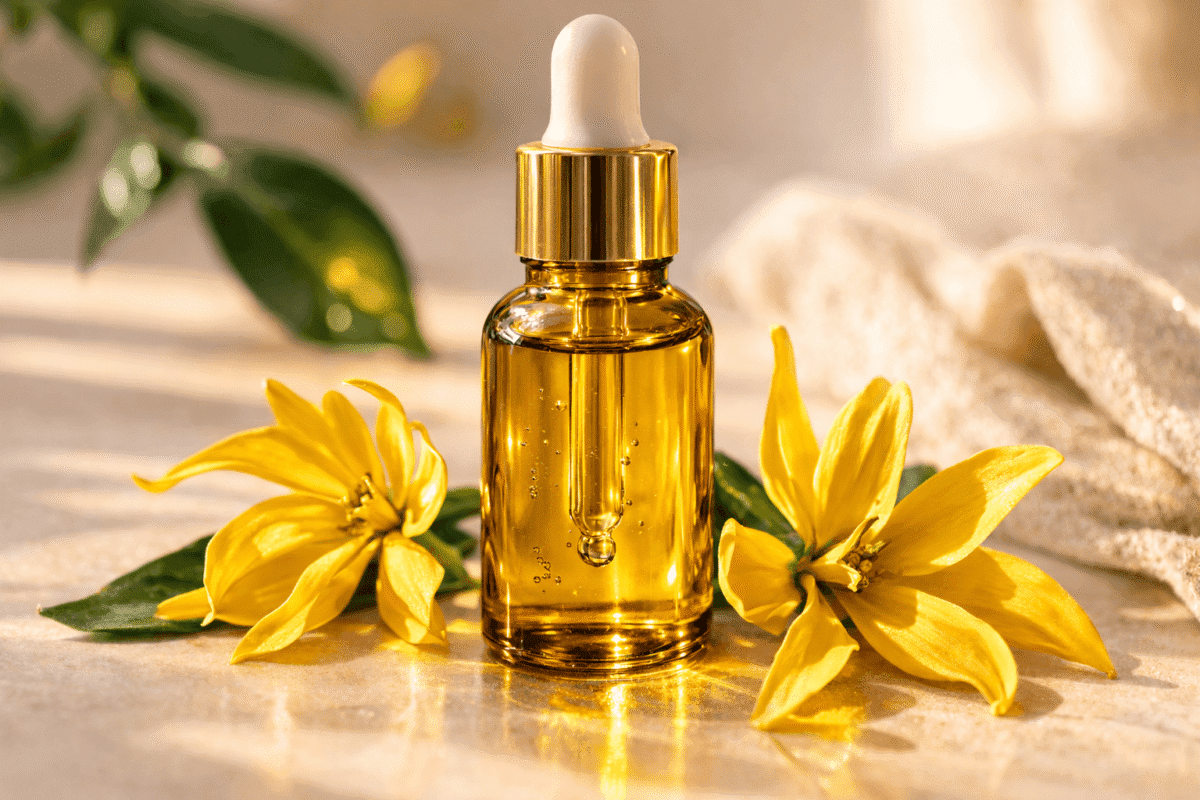
Balancing Facial Oil for Nigerian Skin (30ml Batch)
| Ingredient | Percentage | Volume |
|---|---|---|
| Jojoba Oil | 50% | 15ml |
| Rosehip Oil | 30% | 9ml |
| Squalane Oil | 18.5% | 5.5ml |
| Vitamin E Oil | 1% | 0.3ml |
| Ylang Ylang Essential Oil | 0.5% | 0.15ml |
Method
Measure all carrier oils into a clean amber glass bottle. Add Vitamin E Oil and Ylang Ylang Essential Oil last. Cap tightly and roll the bottle gently between your palms to blend.
No heating is required because this is an anhydrous formulation. Apply 3–4 drops to clean skin morning or evening.
In this formula:
- Jojoba Oil mimics the skin’s natural sebum and helps regulate oil production.
- Rosehip Oil provides antioxidant and brightening support.
- Squalane delivers lightweight hydration suitable for Nigeria’s warm climate.
- Ylang Ylang Essential Oil helps balance oil production while adding a natural floral aroma.
Where to Buy Ylang Ylang Essential Oil in Nigeria
Sourcing cosmetic-grade essential oils in Nigeria requires care. Always ensure the oil:
- Is 100% pure with no synthetic additives
- Includes the correct INCI name on the label
- Comes from a reliable supplier with consistent quality
At Jumira Naturals by Organicsbyjumira, we supply pure Ylang Ylang Essential Oil in Nigeria in multiple sizes suitable for both small-batch testing and large-scale production.
Every essential oil we supply includes full INCI information and formulation guidance. We also ship nationwide across Nigeria with fast delivery.
Explore our full collection of cosmetic-grade essential oils including Lavender, Tea Tree, Peppermint, and Rosemary — all suitable for professional formulation.
