
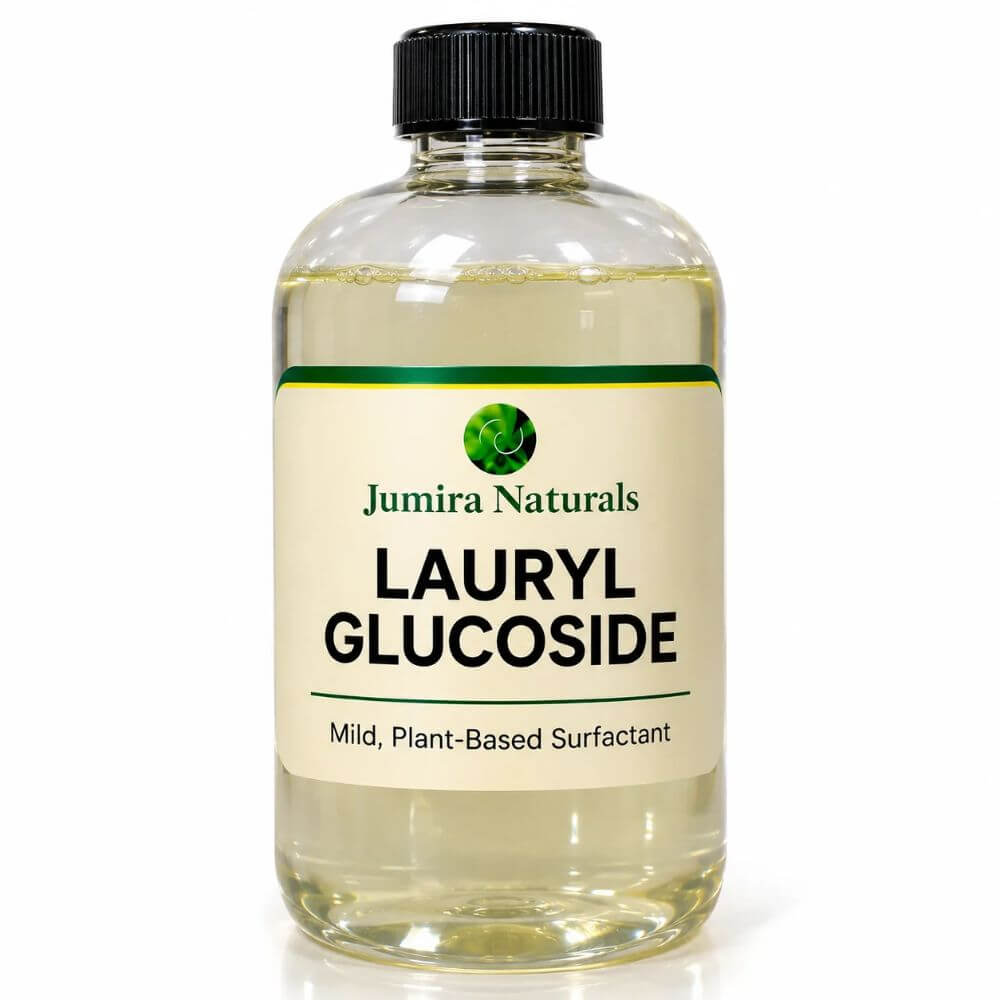
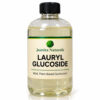
Lauryl Glucoside
Price range: ₦3,900.00 through ₦13,400.00
Lauryl Glucoside is a plant-derived, non-ionic surfactant used in cosmetic and personal care formulations. It functions as a cleansing agent and can contribute to foam, making it suitable for products such as facial cleansers, body washes, shampoos and liquid soaps.
It can be used as a primary or co-surfactant in suitable cleansing formulations and combined with other compatible surfactants to achieve the desired cleansing performance and texture.
Lauryl Glucoside – Non-Ionic Surfactant for Cosmetic Formulations
Lauryl Glucoside is a plant-derived, non-ionic surfactant from the alkyl polyglucoside (APG) family. Cosmetic formulators use it in cleansing products because it helps remove dirt and excess oils while contributing to foam formation.
What Can You Make With This Surfactant?
You can incorporate this ingredient into several personal care products, including:
- Facial cleansers and face washes
- Body washes and shower gels
- Liquid hand washes
- Shampoos
- Bubble bath products
- Other rinse-off cleansing formulations
Benefits in Cosmetic Formulation
This cleansing ingredient offers several formulation benefits:
- It provides non-ionic cleansing action.
- It helps remove dirt and excess oils from the skin.
- It contributes to foam formation in suitable formulations.
- It works alongside compatible anionic and amphoteric surfactants.
- It gives formulators a vegetable-derived surfactant option.
How to Use Lauryl Glucoside
First, prepare your water-based cleansing phase. Next, add the surfactant gradually while mixing gently to minimise excessive foam formation.
Additionally, you can combine it with compatible ingredients such as Cocamidopropyl Betaine and Sodium Laureth Sulfate. However, you should test each combination to achieve the desired foam, viscosity and cleansing performance.
Finally, adjust the finished product’s pH and test its stability and skin compatibility.
Ingredient Information
- INCI name: Lauryl Glucoside
- Surfactant type: Non-ionic
- Ingredient family: Alkyl Polyglucosides (APGs)
- Physical form: Commonly a viscous liquid or paste.
Lauryl Glucoside vs Decyl Glucoside
Both ingredients belong to the alkyl polyglucoside family. However, their fatty alcohol chain distributions differ, which can affect their viscosity, cleansing performance and behaviour in finished formulations.
Therefore, choose the appropriate surfactant according to your formulation goals. Also, test the finished product before substituting one for the other.
Buy Cosmetic Surfactants in Nigeria
At Organicsbyjumira, we provide cosmetic raw materials for skincare formulators, soap makers and personal care manufacturers in Nigeria.
Explore our cosmetic raw materials collection. You can also discover Decyl Glucoside for other cleansing formulations.
For additional ingredient information, consult the European Commission CosIng database.
Frequently Asked Questions
1. What is Lauryl Glucoside used for?
Formulators use it in face washes, body washes, shampoos and liquid hand cleansers.
2. Is it an anionic or non-ionic surfactant?
It is a non-ionic surfactant.
3. Can I use it in facial cleansers?
Yes. You can include it in a suitably designed facial cleansing formula.
4. Can I combine it with Cocamidopropyl Betaine?
Yes. Both ingredients can work together in suitable cleansing systems. Nevertheless, test the complete formula for compatibility and stability.
5. Is it the same as Decyl Glucoside?
No. Both are glucoside surfactants, but they have different fatty alcohol chain distributions and formulation characteristics.
| Weight | 1.25 kg |
|---|---|
| Dimensions | 14 × 14 × 15 cm |
| size | 250ml, 500ml, 1kg |
Be the first to review “Lauryl Glucoside”
You must be logged in to post a review.
Related products

Formulation Ingredients
Formulation Ingredients
Butters & Extracts
Emulsifiers

Formulation Ingredients

Formulation Ingredients
Emulsifiers
Emulsifiers
Reviews
There are no reviews yet.